
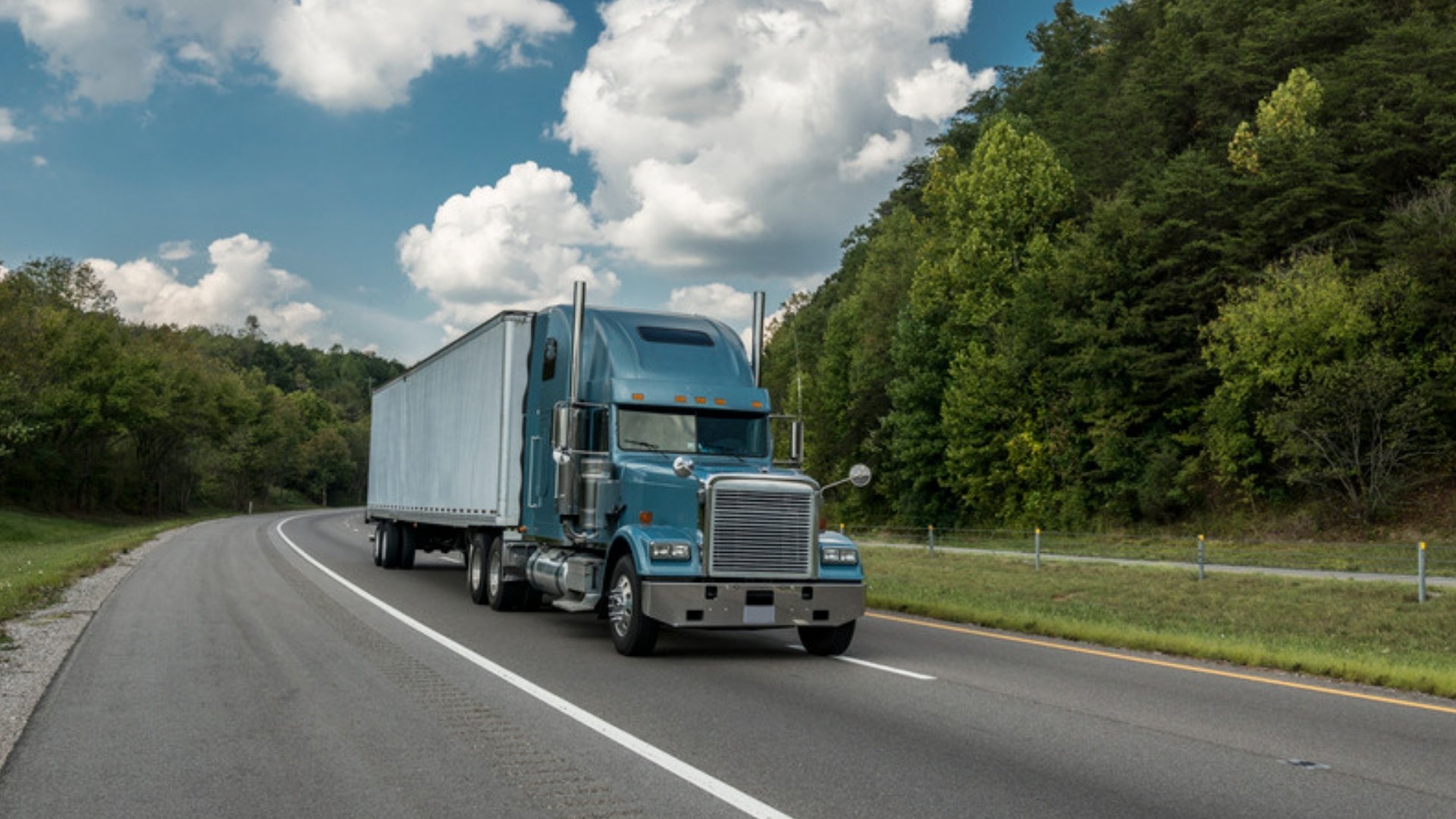
A San Diego truck accident lawyer can sue the truck driver and the motor carrier named on the cab. A freight broker, a repair shop or a parts maker can often be added. A public agency can join after a six-month claim. California makes each defendant pay only its share of pain and suffering, so every responsible company counts.
Robert Hindin & Associates represents people hurt in truck crashes throughout California, including San Diego and the rest of San Diego County. The firm takes only injured people as clients and never works for insurers or trucking companies. Robert Hindin has been admitted to the California Bar since 1975. Kyle Hindin joined the bar in 2016 and has represented only injured people since.
If a semi, a box truck or a delivery rig hit you in San Diego, call Robert Hindin & Associates at (310) 473-0337 for a free case review. Bring a photo of the truck’s door if you have one, because the name and number on it start the search.
Why a Single San Diego Truck Crash Often Involves Several Companies
Who actually put that truck on the road? Usually more than one business. The truck accident lawyers in San Diego at Robert Hindin & Associates trace each load back to every company that touched it. One trailer can pass through a shipper, a broker and a carrier before a driver starts the engine.
San Diego sees a lot of freight. Bureau of Transportation Statistics data counted 990,111 truck entries at the Otay Mesa port of entry in 2025. That led every California crossing and trailed only Laredo, Texas, on the Mexican border. These are the parties that can end up named in a San Diego truck case.
- The driver can be liable for speeding, fatigue or an unsafe lane change.
- The motor carrier can be liable for its driver and for its own hiring and maintenance choices.
- A freight broker can be liable for choosing an unsafe carrier.
- A shipper or loader can be liable when a badly secured load shifts or falls.
- A repair shop or parts maker can be liable for faulty brakes, tires or steering parts.
- A public agency can be liable for a dangerous road, but only after a timely claim.
Not every case has all six. Which of them belongs in yours depends on facts a lawyer pulls from shipping papers, leases and driver logs.
The Driver and the Motor Carrier Behind the USDOT Number
Start with the obvious defendants. The driver answers for careless driving under Civil Code section 1714, California’s basic negligence rule. The carrier usually answers too. Civil Code section 2338 makes a business responsible for the negligence of its agents while they do its work. The firm’s article on crashes caused by drivers who were on the job covers that rule in detail.
Trucking adds two twists. Many rigs are driven by owner-operators, not employees. The name on the trailer is often not the company that controls the tractor, either. How these rules apply to your crash depends on contracts a lawyer has to obtain and read.
Reading the Carrier Name and USDOT Number on the Cab
Federal rules require every self-propelled commercial motor vehicle to show its operating carrier’s name and USDOT number. Under 49 CFR section 390.21, the marking must appear on both sides. It must be readable from 50 feet in daylight while the truck is parked. When another company’s name also appears, the words “operated by” must come before the carrier’s name. A clear photo of that door can identify the carrier before any report exists.
When the Carrier Calls the Driver an Independent Contractor
Carriers sometimes argue that an owner-operator was in business for himself. That defense runs into two rules, one federal and one from a California appellate court. Both lead back to the company that controlled the haul, even when the driver owned the tractor. Whether they fit your crash depends on the lease and the carrier’s operating authority. Expect the insurer to raise the contractor label early.
The Federal Lease Rule for Owner-Operators
When a carrier leases a truck and driver from an owner-operator, 49 CFR section 376.12 sets the lease terms. Under subsection (c)(1), the carrier must have “exclusive possession, control, and use” of the equipment. The lease must also say the carrier assumes “complete responsibility” for operating it. Subsection (c)(4) says these terms do not decide whether the driver is an employee.
Why California Carriers Cannot Hand Off Their Duty Under Serna
California goes further. In Serna v. Pettey Leach Trucking, Inc. (2003) 110 Cal.App.4th 1475, the Court of Appeal held that a regulated motor carrier’s duties cannot be delegated. A carrier operating under public authority is liable for harm caused by its independent contractor’s negligence. The court applied that rule even though the frozen poultry on board was exempt from economic regulation.
The Carrier’s Own Negligence and the Records That Prove It
A carrier can also be liable for its own mistakes. Hiring a driver with a bad record, pushing impossible delivery schedules and skipping brake work all fall under Civil Code section 1714. These claims stand apart from anything the driver did. Proving them takes the carrier’s internal paperwork.
Federal rules tell carriers what to keep and for how long. Some windows close fast, which is why a preservation letter goes out early in a San Diego truck case. These are the retention periods that come up most.
- Records of duty status and supporting documents must be kept at least 6 months under 49 CFR section 395.8(k)(1).
- Inspection, repair and maintenance records must be kept for 1 year, and for 6 months after the truck leaves the carrier’s control, under section 396.3(c).
- The carrier’s accident register must be kept for 3 years after each crash under section 390.15(b).
- Safety histories from a driver’s past employers must be kept while the driver works there and for 3 years after, under section 391.53(c).
After those windows close, federal rules no longer require the carrier to keep the records. Whether the paperwork shows a violation that caused your crash turns on details a lawyer has to compare line by line.
Hiring Records and the Driver’s Past Employers
Before hiring a driver, a carrier has to ask previous employers about that driver’s safety performance. Section 391.53 requires the carrier to keep those answers in a driver investigation history file. A file showing earlier crashes or failed drug tests can support a negligent hiring claim. An empty file can matter just as much, because it shows what the carrier never asked.
Post-Crash Drug and Alcohol Testing Under Federal Rules
Federal law requires a motor carrier to test its driver for alcohol and drugs after certain crashes. The rule sits in 49 CFR section 382.303, and the results become part of the carrier’s records. Not every crash triggers a test, and the deadlines are tight. A test that never happened can raise its own questions about how the carrier responded.
Which Crashes Require the Carrier to Test the Driver
Section 382.303 sorts crashes by what happened. The duty depends on whether someone died, whether someone needed treatment away from the scene, and whether a vehicle was towed. For the last two, a traffic citation decides the question. A crash on Interstate 805 that sends someone to the hospital by ambulance fits the treatment category.
Fatal Crashes Require Testing Every Time
When a crash kills someone, the carrier must test its surviving driver for alcohol and controlled substances. No citation is needed, and the carrier cannot skip the test because fault looks unclear. The duty covers any driver who was performing safety-sensitive functions with the truck at the time.
Injury and Tow-Away Crashes Turn on a Citation
Without a death, the duty depends on a ticket. The carrier must test for alcohol if the driver gets a moving violation citation within 8 hours. Drug testing applies if the citation comes within 32 hours. The crash must also involve an injury treated away from the scene or a vehicle towed off with disabling damage.
How Fast the Alcohol Test Has to Happen
Alcohol leaves the body quickly, so the rule sets short clocks. If the test does not happen within 2 hours, the carrier must write down why. After 8 hours, it must stop trying and record the reason. Those written explanations are records your lawyer can request.
Freight Brokers and the Supreme Court’s 2026 Montgomery Decision
Can you sue the company that only booked the load? Until this year, brokers had a strong answer. They argued that the Federal Aviation Administration Authorization Act wiped out state negligence claims about how they chose carriers. Federal appeals courts split on that argument.
On May 14, 2026, the U.S. Supreme Court settled it in Montgomery v. Caribe Transport II, LLC. In a unanimous opinion by Justice Barrett, the Court held that a negligent hiring claim against a broker is not preempted. The statute says it “shall not restrict the safety regulatory authority of a State with respect to motor vehicles.” In that case, C.H. Robinson had booked a carrier holding a “conditional” federal safety rating.
The ruling does not make every broker liable. You still have to prove the broker was careless in picking the carrier. A negligent selection claim usually looks at what the broker could see before the load moved.
- The broker could check the carrier’s federal safety rating, including a conditional rating like the one in Montgomery.
- The broker could confirm the carrier held active operating authority and current insurance.
- The broker could review the carrier’s crash and inspection history in federal records.
A broker’s own files show what it checked. Whether its choice was negligent depends on those files, and a lawyer has to request them to find out.
Shippers, Repair Shops and Public Agencies That Can Share the Blame
Some truck crashes start long before the driver makes a mistake. A load can shift because a warehouse crew strapped it badly. Brakes can fail because a shop skipped a step. Each of those failures points at a different defendant.
Civil Code section 1714 makes each of these businesses responsible for its own lack of ordinary care. Proving it takes different evidence for each one. Whether any of them belongs in your case depends on records a lawyer has to trace, including the bill of lading and the last repair invoice.
Loaders and Shippers Who Secure the Freight
The company that loads and secures cargo controls how it rides. When a shipper’s crew loads a sealed trailer, the driver may never see how the freight was stacked. A load that shifts on the ramp to Interstate 805 can point straight back to that loading crew. The bill of lading and the loading records show who did the work and when.
Repair Shops and Truck Part Makers
Carriers often send trucks to outside shops for brakes and tires. A shop that does careless work can be liable under the ordinary care rule. A maker of a defective part faces a stricter standard. California’s jury instruction on strict product liability, CACI No. 1200, covers a manufacturing defect, a design defect or a missing warning. The failed part has to be preserved before anyone scraps the truck.
Road Defects on Caltrans Freeways and City Streets
A public agency can be liable for a dangerous condition of its property under Government Code section 835. In San Diego, that usually means Caltrans for the interstates and state routes, or the City of San Diego for city streets. You must present a written claim within six months under Government Code section 911.2 before you can sue. Miss that date, and the agency can defeat a claim with strong facts.
How California Splits Damages Among Several Truck Defendants
Here is the rule most truck crash pages leave out. California follows pure comparative fault, so a jury assigns a percentage to everyone who caused the crash. Under Li v. Yellow Cab Co. (1975) 13 Cal.3d 804, your own share reduces your damages without barring them. The harder question is how the other shares get paid.
California Civil Code section 1431.2, added by Proposition 51 in 1986, answers that question. It treats the two main types of damages differently.
- Economic damages, such as medical bills and lost wages, stay joint, so one defendant can be made to pay all of them.
- Non-economic damages, such as pain and emotional distress, are several only.
- Each defendant pays only its own percentage of the non-economic award, under a separate judgment.
That third rule is why the list of defendants matters so much. How a jury would divide fault in your crash depends on evidence a lawyer has to develop.
An Example With a Carrier, a Broker and a Repair Shop
Say a jury finds the carrier 60% at fault, the broker 30% and a repair shop 10%. The carrier pays 60% of the non-economic award, not all of it. If the broker cannot pay, the carrier does not cover its 30%. You absorb that gap for pain and suffering, though not for medical bills. This is an illustration, not a prediction about any real case.
Fault Assigned to a Company That Was Never Sued
Defendants can also point at companies you left out. In DaFonte v. Up-Right, Inc. (1992) 2 Cal.4th 593, the California Supreme Court measured a defendant’s share against all fault responsible for the injury. That includes fault belonging to someone who is not in the case. If an unnamed broker takes 30% of the blame, that part of your pain and suffering award may go uncollected.
Insurance Minimums Behind the Big Rigs on San Diego Freeways
How much coverage stands behind the truck that hit you? Federal law sets the floor for interstate carriers in 49 CFR section 387.9. A truck rated at 10,001 pounds or more must carry at least these amounts.
- A for-hire carrier hauling ordinary freight across state or national lines needs $750,000.
- A carrier hauling oil or most hazardous materials needs $1,000,000.
- A carrier hauling certain bulk hazardous materials, such as explosives and some poison gases, needs $5,000,000.
Compare that with a private car. Vehicle Code section 16056 requires only $30,000 per person for policies issued or renewed since January 1, 2025. In-state haulers answer to Vehicle Code section 34631.5, which sets $750,000 for most California motor carriers of property. Carriers that run only vehicles under 10,000 pounds, such as many delivery vans, need $300,000.
Trucks from Mexico follow their own rule. Under 49 CFR section 387.7(b)(3), a Mexico-based carrier working only in the border commercial zone can buy policies as short as 24 hours. Section 387.7(g) denies entry to a truck without proof of coverage. After a crash near Otay Mesa, the dates on that proof can decide whether any policy was in force. The firm’s truck accident attorneys in California look past these minimums, because real limits vary and only the actual policies show what applies.
Where a San Diego Truck Accident Lawyer Files Your Case
Most local truck cases start in San Diego County Superior Court. Civil filings go through the court’s business office at the Hall of Justice, 330 West Broadway. Under Code of Civil Procedure section 335.1, you generally have two years from the crash to file an injury lawsuit. A demand letter to an insurer does not stop that clock.
Truck cases bring two wrinkles here. The crash report may come from a state agency, and the case may not stay in state court. Which court hears your case depends on where each defendant is based. The firm’s personal injury attorneys in San Diego sort that out before filing.
Who Writes the Report for a San Diego Truck Crash
Location decides the agency. The San Diego Police Department handles crashes on city streets. The California Highway Patrol handles the freeways, including Interstate 5, Interstate 805 and State Route 905. The CHP Border Division, headquartered at 9330 Farnham Street, oversees the San Diego Area office and a commercial vehicle enforcement facility at Otay Mesa. Write down the report number and the agency name before you leave the scene.
State Court at the Hall of Justice or Federal Court Across Broadway
Out-of-state carriers may try to move the case to federal court. Under 28 U.S.C. section 1332(a), federal courts hear cases between citizens of different states when more than $75,000 is at stake. The same statute reaches a case against a foreign company, such as a carrier based in Mexico. That court sits at the James M. Carter and Judith N. Keep U.S. Courthouse, 333 West Broadway, across the street from the Hall of Justice. Section 1441(b)(2) blocks that diversity removal when a properly joined and served defendant is a California citizen.
Questions San Diego Drivers Ask About Suing a Trucking Company
These are the questions people ask most after a truck crash in San Diego County. The answers are general information about California and federal law. Your own case turns on facts a lawyer has to review, so treat each answer as a starting point for that talk.
How Long Do I Have to Sue a Trucking Company in California?
Code of Civil Procedure section 335.1 generally gives you two years from the crash. A claim against Caltrans or the City of San Diego must be presented within six months under Government Code section 911.2. Some carrier records only have to be kept for 6 months, so evidence can vanish long before the two-year deadline.
Can I Still Recover if I Was Partly at Fault for the Truck Crash?
Usually, yes. California’s pure comparative fault rule reduces your damages by your share of fault but does not bar them. A jury sets the percentages from the evidence in your case.
Can a Family Sue Every Responsible Company After a Fatal Truck Crash?
Generally, yes. Code of Civil Procedure section 377.60 lists who may bring a wrongful death action, including a surviving spouse, domestic partner and children. The firm’s wrongful death attorneys handle fatal crashes involving motor vehicles.
Why Do Extra Defendants Matter More After a Brain Injury?
A serious brain injury can require care for years, and the cost can exceed a single policy. Each liable company may bring its own insurance. Whether more coverage exists depends on facts a lawyer has to investigate. The firm’s traumatic brain injury attorneys work on these claims.
Talk to a San Diego Truck Accident Lawyer Before the Logs Are Gone
Federal rules guarantee only 6 months for a driver’s duty status records. A San Diego truck accident lawyer at Robert Hindin & Associates can send preservation demands to the carrier, the broker and the repair shop. The firm can then build a list of every company that may share the blame. No lawyer can promise how a case ends, but a full list lets the jury assign every share of fault.
Robert Hindin has been admitted to the California Bar since 1975. Kyle Hindin has been named to Super Lawyers Rising Stars every year from 2022 through 2026 and is a member of CAALA. You can read about the firm’s attorneys before you call. The firm never represents insurers, offers Spanish-language support, and serves clients statewide from 11400 West Olympic Boulevard, Suite 200, Los Angeles, CA 90064.
Call Robert Hindin & Associates at (310) 473-0337 for a free consultation, or send the details through the firm’s contact page. Keep your truck photos, the report number and any insurer letters nearby. With those in hand, the first call can map out every company tied to your crash.