
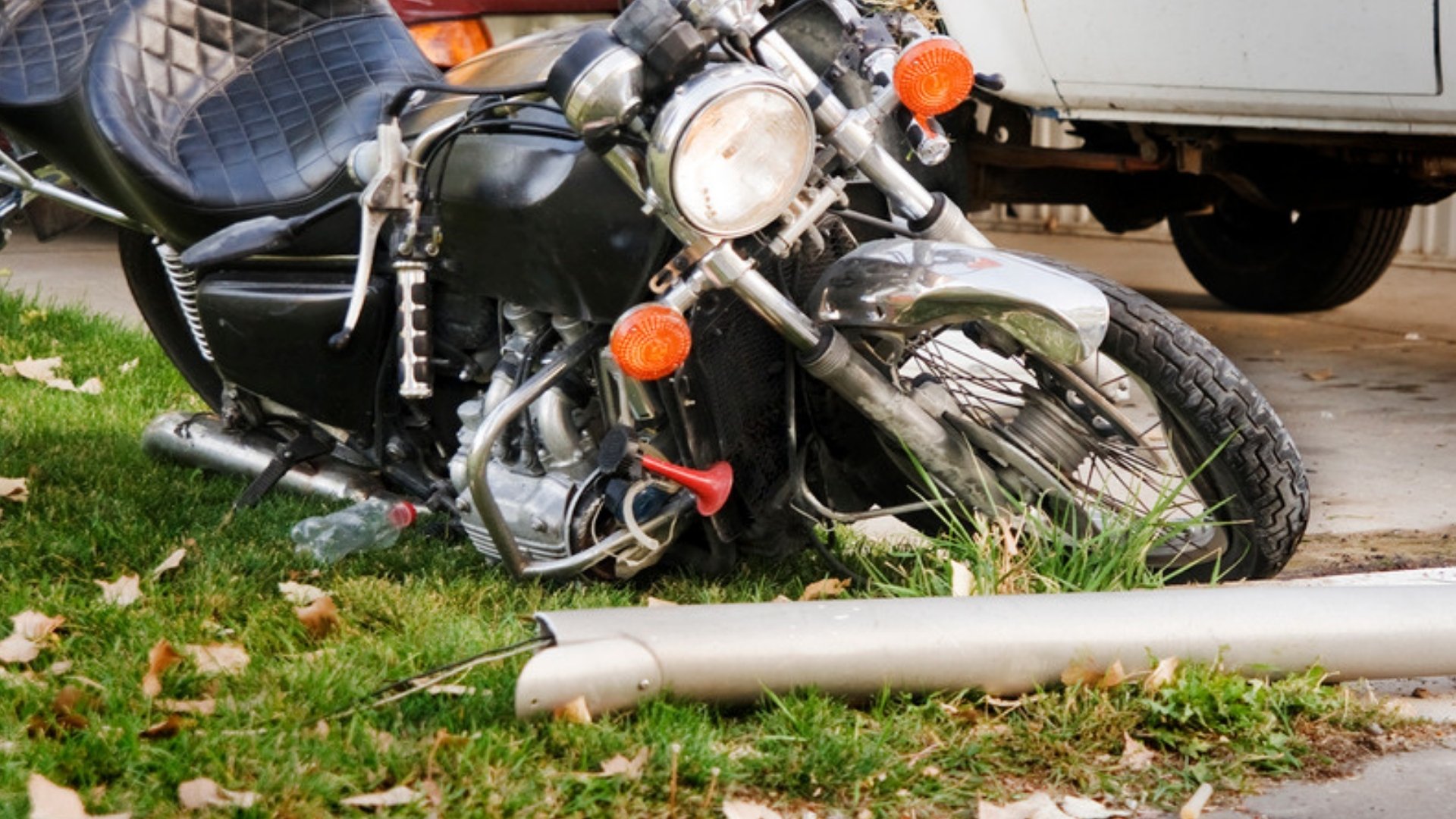
A San Jose motorcycle accident lawyer checks the uninsured motorist coverage on your motorcycle policy first, then any household car policy and the driver’s own assets. Your car policy often excludes a bike you own but insure elsewhere. A hit-and-run claim also needs physical contact, a police report within 24 hours and a sworn statement within 30 days.
Robert Hindin & Associates represents injured riders across California, including people hurt on San Jose streets and Santa Clara County freeways. The firm takes only injured people as clients and never works for insurance companies. Robert Hindin brings more than 50 years of California practice. Kyle Hindin was named to Super Lawyers Rising Stars from 2022 through 2026, and the firm offers bilingual Spanish-language support.
If an uninsured or hit-and-run driver knocked you off your motorcycle in San Jose, call Robert Hindin & Associates at (310) 473-0337 for a free case review. Keep your motorcycle policy’s declarations page handy, because the uninsured motorist line on it shapes the first conversation.
Why an Uninsured Driver Does Not End a Motorcycle Claim in San Jose
Did the driver who hit you shrug and admit there was no insurance? That moment feels like a dead end. Usually it is not. The motorcycle accident lawyers in San Jose at Robert Hindin & Associates start with a different question. Which policies in your own household might pay?
California requires every driver and vehicle owner to be able to show financial responsibility under Vehicle Code section 16020. Plenty of people drive without it anyway. The California Office of Traffic Safety’s 2023 crash rankings counted 368 people killed or injured in motorcycle crashes across Santa Clara County. The same data showed 746 injury or fatal hit-and-run crashes countywide, freeways included. In both kinds of crashes, the rider’s own coverage often decides what money exists.
A lawyer works through the possible sources in a set order.
- The uninsured motorist coverage on the policy that insures your motorcycle comes first.
- A household car policy helps only when its owned-vehicle exclusion does not block it.
- Medical payments coverage, health insurance and disability benefits can cover bills while the claim is open.
- The uninsured driver can be sued personally, and the DMV can suspend a license until a crash judgment is paid.
Not every rider has all four. Which ones fit your crash depends on policy language and facts a lawyer has to read side by side.
How Uninsured Motorist Coverage Works on a California Motorcycle Policy
Uninsured motorist coverage, usually shortened to UM, pays what you could have collected from a driver who had no insurance. Insurance Code section 11580.2 requires insurers to include it in motor vehicle bodily injury liability policies issued in California. It covers bodily injury and wrongful death caused by the owner or operator of an uninsured motor vehicle.
That requirement comes with an exit. The statute lets the named insured delete the coverage, or lower it, by signing a written agreement. Riders shopping for a cheaper motorcycle premium sign those forms more often than they remember. So the first document a lawyer requests is the signed application, not the one-page policy summary.
The Written UM Waiver Many Riders Sign Without Noticing
Section 11580.2 spells out the wording a deletion agreement must use, and it prints that text inside the statute itself. Once signed, the waiver binds every insured under the policy. It also carries forward through renewals and replacement policies from the same insurer. A rider who waived UM years ago may still have none today. Whether a particular form meets the statute is a question a lawyer answers by reading the signed paper.
Minimum Limits Changed on January 1, 2025
Vehicle Code section 16056 sets California’s minimum liability limits. For any policy issued or renewed on or after January 1, 2025, the floor is $30,000 per person, $60,000 per accident and $15,000 for property damage. Policies issued before that date stayed at the old $15,000 and $30,000 bodily injury minimums until renewal, and many websites still print those figures. Insurers must offer UM at your liability limits, but section 11580.2(m) does not require them to offer more than $30,000 per person and $60,000 per accident.
Why Your Car Policy May Not Cover You on Your Own Motorcycle
Here is the trap that catches San Jose riders. You carry solid UM limits on the family car. Your motorcycle sits on a separate policy with a different company. You assume the car policy backs you up on the bike. California law often says otherwise.
Section 11580.2(c)(6) excludes injury to an insured “while occupying a motor vehicle owned by an insured” unless that vehicle is an insured motor vehicle under the same policy. The statute defines “motor vehicle” in that paragraph as any self-propelled vehicle, and a motorcycle fits. So the car policy’s UM usually stays out when you ride a bike you own that is insured somewhere else. The exclusion falls away when the motorcycle is the vehicle described in the policy you claim under. That is why a lawyer reads every declarations page in the household.
Borrowed motorcycles follow a different rule. Under section 11580.2(c)(2), your UM does not apply while you ride another person’s vehicle if that owner carries similar coverage, so the owner’s UM answers first. When two policies do apply, subdivision (d) lets insurers cap the total at the higher of the two limits and split the loss. How these rules play out turns on which vehicles each policy lists and who owns them.
Hit-and-Run Motorcycle Crashes and the Physical Contact Rule
What if the driver never stops at all? Section 11580.2(b) treats a hit-and-run vehicle as uninsured when its owner or operator is unknown. Your UM then pays as if the driver had no policy. The catch sits in three conditions, and motorcycle crashes test the first one constantly.
- The injury must arise from physical contact between the unknown vehicle and you or the motorcycle you were riding.
- Someone must report the crash to the proper police agency within 24 hours.
- You must file a sworn statement with your insurer within 30 days, with facts showing a claim against an unidentified driver.
Miss one, and the insurer has grounds to deny. Whether your facts satisfy each condition is something a lawyer checks against the report, the witness statements and the bike itself.
When a Car Cuts You Off Without Touching the Bike
Riders know this crash. A car drifts into your lane on US-101, you brake hard or swerve, and the motorcycle goes down. The car never touches you and keeps going. In Orpustan v. State Farm Mutual Automobile Insurance Co. (1972) 7 Cal.3d 988, the California Supreme Court held that physical contact is a condition precedent in every hit-and-run UM claim. The driver in that case swerved to avoid a car that came within a few feet. The court rejected the idea that causing the crash could replace contact, then sent the dispute to an arbitrator to decide. Today the statute still requires contact.
That makes proof of contact worth chasing early. Paint transfer on a saddlebag, a scuffed mirror or a fresh dent can prove a touch that a witness missed. Photos taken before any repair shop works on the bike preserve that evidence.
The 24-Hour Police Report and the 30-Day Sworn Statement
The reporting rules are short and unforgiving. Section 11580.2(b)(2) requires a report within 24 hours to the police department of the city where the crash happened. In unincorporated territory, the report goes to the county sheriff or the local CHP office. Within the following 30 days, you owe your own insurer a sworn statement. It must say you have a claim against a person whose identity cannot be found, and it must give supporting facts.
Which Agency Takes the Report Inside San Jose
San Jose is an incorporated city, so the statute’s text points to the San Jose Police Department. Read literally, that holds even on a freeway inside city limits, where CHP usually investigates. Vehicle Code section 20008 separately requires a driver in an injury crash inside a city to file a written report within 24 hours with either CHP or the city police. Reporting to both agencies within the first day removes any argument about which report counted.
City Streets and the San Jose Police Department
A crash inside city limits on a surface street such as Story Road, Tully Road or Senter Road is SJPD’s call. The responding officer writes the collision report and assigns a report number. Get that number at the scene or soon after, because the Records Unit asks for it later.
Freeways and the CHP San Jose Area Office
CHP’s San Jose Area office at 2020 Junction Avenue patrols freeways including US-101, Interstate 280, Interstate 680, Interstate 880, State Route 85, State Route 87 and State Route 237. A crash on any of them usually draws a CHP officer rather than SJPD. A rider who reports to CHP can add a report to SJPD the same day to match the statute’s wording.
Requesting the SJPD Collision Report Later
SJPD releases vehicle accident reports through its Records Unit at 201 West Mission Street. Under Vehicle Code section 20012, involved drivers, injured people, their insurers and their lawyers may obtain a copy. The department asks requesters to allow at least 45 days before looking for a report online. Reports involving a felony hit-and-run cannot be released online at all. Those must be requested by mail or in person, and a mailed request costs $16.
Underinsured Drivers and Why $30,000 in UIM Can Pay Nothing
Sometimes the driver has insurance, just not enough. A rider with a broken pelvis or a head injury can run through a $30,000 policy fast. Underinsured motorist coverage, or UIM, fills part of that gap. California’s version works differently than most riders expect.
Section 11580.2(p)(2) defines an underinsured vehicle as one insured for less than the UM limits on the injured person’s vehicle. Under (p)(4), the most UIM pays is your limit minus whatever the at-fault driver’s insurer paid. It is an offset, not extra money stacked on top. What you actually collect still depends on the damages you prove and on your policy’s terms, which a lawyer has to review.
Matching the New Minimum Leaves No Underinsured Driver
Run the numbers with the 2025 limits. A driver carrying $30,000 hits a rider whose own UIM limit is also $30,000. That driver is not underinsured at all under (p)(2), because the coverage is not less than the rider’s limit. Before 2025, the same rider facing a $15,000 driver could have looked to UIM for up to $15,000 more. A higher UIM limit restores that gap, minus whatever the driver’s insurer pays.
Exhausting the At-Fault Policy Before UIM Pays
UIM pays nothing until the at-fault driver’s liability limits are used up. Section 11580.2(p)(3) requires those limits to be exhausted by judgment or settlement, with proof sent to your UIM insurer. In Hartford Fire Insurance Co. v. Macri (1992) 4 Cal.4th 318, the California Supreme Court held that the statute’s consent-to-settle exclusion does not apply to UIM claims. Your policy may still carry its own notice terms, so a lawyer tells the UIM carrier before accepting the driver’s limits. Subdivision (q) also bars stacking the limits of two vehicles or two policies.
What a San Jose Motorcycle Accident Lawyer Expects in UM Arbitration
Here is the strange part. Once you make a UM claim, your own insurance company becomes the other side. Section 11580.2(f) sends any disagreement over fault or the amount owed to arbitration before a single neutral arbitrator. The insurer can use the tools the uninsured driver’s lawyer would use, including depositions and written discovery under the Code of Civil Procedure.
The insurer also owes only what you are “legally entitled to recover” from the uninsured driver. That phrase brings California’s fault rules into the room. How an arbitrator weighs your evidence is never certain, and the result turns on facts a lawyer has to develop early.
Three Ways to Stop the Two-Year UM Clock
The UM deadline is not the same as the lawsuit deadline, though both run two years. Section 11580.2(i)(1) bars the claim unless one of these happens within two years of the crash.
- You file a bodily injury lawsuit against the uninsured motorist in a proper court.
- You and your insurer sign an agreement on the amount owed.
- A formal arbitration demand goes to the insurer in writing by certified mail, return receipt requested.
Once started, arbitration must finish within five years under (i)(2). Subdivision (k) requires the insurer to warn you about the deadline at least 30 days before it expires, unless it knows a lawyer represents you.
Fault Arguments Your Own Insurer Can Raise
California uses pure comparative fault under Li v. Yellow Cab Co. (1975) 13 Cal.3d 804. Your share of blame reduces the award but never wipes it out. Expect the UM carrier to look hard at how you were riding, because every point of fault it proves comes off what it owes. Two arguments show up often in motorcycle cases, and both start with the Vehicle Code.
Lane Splitting Under Vehicle Code Section 21658.1
Vehicle Code section 21658.1 defines lane splitting as riding a two-wheeled motorcycle between rows of stopped or moving vehicles in the same lane. The statute lets CHP publish safety guidelines for the practice rather than banning it. An insurer can still argue you split lanes too fast on I-880 or I-680. Lawful conduct is not always careful conduct, and that difference is where the fault fight happens.
Helmet Use Under Vehicle Code Section 27803
Vehicle Code section 27803 requires every rider and passenger to wear a helmet that meets the standards in section 27802. The statute says nothing about how a missing helmet affects an injury claim. Insurers argue it by analogy to seat belt cases, and the argument only reaches injuries a helmet would have prevented. The firm’s article on claims by riders who were not wearing a helmet walks through that defense.
Where Discovery Fights Go in Santa Clara County
UM arbitration happens outside a courtroom, yet a court still referees discovery disputes. Section 11580.2(f)(1) gives that job to the superior court in any county where you could have sued the uninsured driver. Code of Civil Procedure section 395(a) makes the county where the injury occurred a proper county. For a San Jose crash, that means Santa Clara County Superior Court. It hears civil cases at the Downtown Superior Court, 191 North First Street, and at the Old Courthouse.
When the Injured Rider Had No Insurance Under Proposition 213
Now flip the situation. What if you were the one riding without coverage? Proposition 213, codified as Civil Code section 3333.4, cuts off non-economic damages for an uninsured vehicle owner hurt in a crash. That covers pain, suffering, inconvenience, physical impairment and disfigurement. Medical bills and lost wages, the economic losses, stay recoverable.
The bar applies when the injured person owned an uninsured vehicle involved in the crash, or drove without being able to show financial responsibility. It also applies to a rider convicted of DUI for that ride. Subdivision (b) reaches UM policies too, so no household policy can pay those losses either. Under subdivision (c), an uninsured owner hit by a driver later convicted of DUI keeps the right to non-economic damages. A rider who drops coverage while the bike sits in the garage, then takes one ride, can land inside the bar.
Collecting Directly From the Uninsured Driver in California
Can you simply sue the driver? Yes. Code of Civil Procedure section 335.1 gives you two years from the crash to file a personal injury lawsuit. The harder question is whether a judgment will ever be paid, since a driver who skipped insurance often has little to collect. A lawyer looks at wages, property and any other coverage before recommending that path.
California adds some pressure behind the lawsuit.
- Vehicle Code section 16000 requires each driver to report an injury crash to the DMV within 10 days.
- Under section 16070, the DMV suspends a driver who cannot show financial responsibility for the crash, 30 days after mailing notice.
- Under section 16370, the DMV suspends the license of a driver who leaves a crash judgment unpaid for 30 days.
None of these tools forces payment. The realistic value of a direct claim depends on what a lawyer learns about the driver’s finances.
Questions San Jose Riders Ask About Uninsured and Hit-and-Run Drivers
These questions come up in early calls with riders after crashes on San Jose roads and freeways. Each answer states the general California rule. Your policy wording and the crash facts decide how the rule applies, so treat each answer as a starting point for a longer conversation.
Does UM Pay to Fix My Damaged Motorcycle?
Bodily injury UM does not, because section 11580.2(c)(1) excludes property damage. Insurance Code section 11580.26 requires insurers to offer separate uninsured motorist property damage coverage. It waives your collision deductible, or without collision coverage it pays the bike’s actual cash value or $3,500, whichever is less. It requires direct contact, an identified driver or plate, and a report to your insurer within 10 business days.
Is My Passenger Covered by My UM?
Usually, yes. Section 11580.2(b) treats any person in or upon an insured motor vehicle as an insured. A passenger on a motorcycle described in your policy can claim under its UM, subject to the same limits and conditions.
Can My Family Make a UM Claim if a Rider Is Killed?
Yes. Section 11580.2(a)(1) covers the insured’s heirs for wrongful death caused by an uninsured driver. Families often pursue that claim alongside a wrongful death case in California against the driver.
Should I Give My Own Insurer a Recorded Statement for a UM Claim?
Your policy may require cooperation, and section 11580.2(o) lets the insurer request wage information, medical records releases and a medical exam on set timelines. A statement given before you understand the exclusions can still hurt the claim. The firm’s article on recorded statements after a crash explains what adjusters listen for.
Talk to a San Jose Motorcycle Accident Lawyer Before the Two-Year UM Deadline
An uninsured driver changes who pays, not whether you have a claim. A San Jose motorcycle accident lawyer at Robert Hindin & Associates can read every policy in your household and check the waiver forms. The firm also tracks the 24-hour, 30-day and two-year deadlines. No lawyer can promise how an arbitrator will rule, but a missed deadline can end a UM claim before anyone weighs the facts.
Call Robert Hindin & Associates at (310) 473-0337 for a free consultation. The office is at 11400 West Olympic Boulevard, Suite 200, Los Angeles, CA 90064, and the firm represents injured riders throughout California, San Jose included.
Prefer to write first? Use the firm’s contact page to describe the crash and the policies you carry. You can also read about the firm’s California motorcycle accident attorneys and its work for personal injury clients in San Jose.