
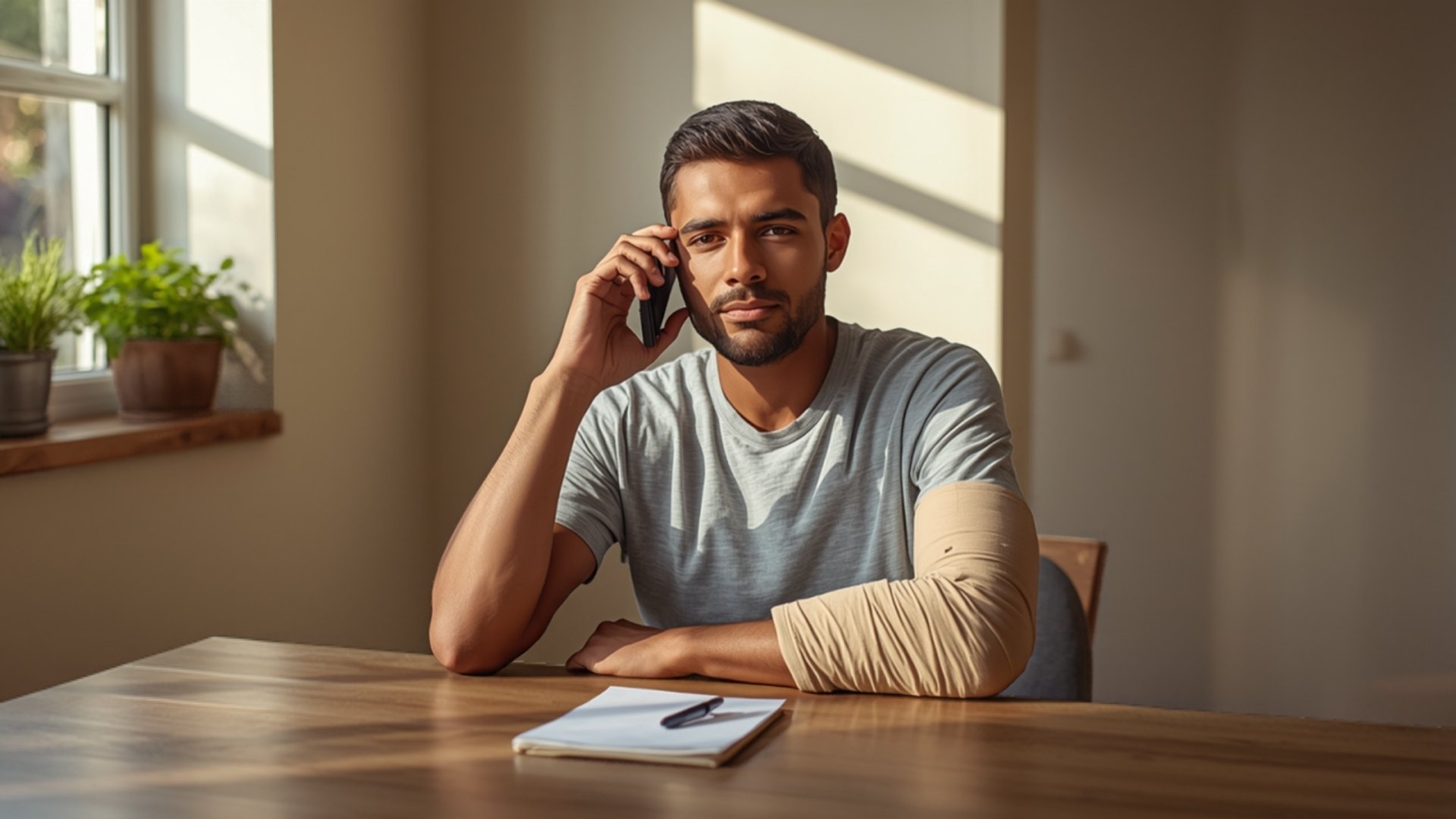
No California law makes you give the at-fault driver’s insurer a recorded statement, and the adjuster needs your consent to record. The carrier owes you a decision, or a written explanation, within 40 days of proof. Your own insurer can require more. A Santa Ana pedestrian accident lawyer can review the police report before you say anything on tape.
Robert Hindin & Associates represents people hurt in pedestrian crashes across California, including Santa Ana and the rest of Orange County. Robert Hindin has been admitted to the California Bar since 1975. Kyle Hindin was admitted in 2016, has represented only injured people since, and belongs to the Orange County Bar Association. The firm has never represented an insurer.
If an adjuster wants to record you after a Santa Ana pedestrian crash, call Robert Hindin & Associates at (310) 473-0337 for a free case review. The call costs nothing, and you decide what happens next.
Why the Driver’s Insurer Calls So Fast After a Santa Ana Pedestrian Crash
Did an adjuster call before you had even filled your prescriptions? That timing is not random. The at-fault driver’s carrier wants your account of the crash, in your own words, on tape. That request is the first real decision in a pedestrian claim, and the pedestrian accident lawyers in Santa Ana at Robert Hindin & Associates can help you make it.
Santa Ana gives carriers plenty of these files. The California Office of Traffic Safety counted 157 pedestrians killed or injured in Santa Ana crashes in 2023. That placed the city fifth among the 15 California cities with more than 250,000 residents.
What the Adjuster Wants Before the Police Report Is Released
Here is the timing problem. The Santa Ana Police Department says a typical collision report can take two to four weeks to be approved for release. A report on a fatal collision can take six to eight months. The first adjuster call often lands inside that gap, before anyone has read what the officer wrote. A statement given then comes from memory, pain and guesswork, and every mismatch with the report becomes a talking point later.
How Evidence Code Section 1220 Turns Your Words Into Evidence
Why does a recording matter so much? California Evidence Code section 1220 says a statement is not made inadmissible by the hearsay rule “when offered against the declarant in an action to which he is a party.” In plain terms, your own words can be used against you if the case is filed. A casual “I didn’t see the car” on a recorded line can be read to a jury, long after your memory of the call fades.
Do You Have to Talk to the Other Driver’s Insurance Company in California?
No. You have no contract with the at-fault driver’s carrier, so you owe it no cooperation. The obligations run the other way. California’s Fair Claims Settlement Practices Regulations set deadlines for insurers, and they protect claimants the insurer does not insure, which includes you. You can read the settlement standards in section 2695.7 yourself.
That does not mean silence helps every case. Some facts help you, and a carrier cannot weigh evidence it never sees. Whether a recording, a written account or no contact at all fits your claim depends on facts a lawyer has to review first.
The Deadlines the Carrier Owes You Under the Fair Claims Regulations
Most injured pedestrians never hear that the insurer runs on a regulatory calendar. It starts when the carrier receives notice of your claim, written or oral, not when you agree to be recorded. Section 2695.7, subdivision (d), also requires a thorough, fair and objective investigation. The same subdivision says the insurer “shall not persist in seeking information not reasonably required” to resolve the claim.
Fifteen Days to Acknowledge Your Claim and Start Investigating
Section 2695.5, subdivision (e), gives the insurer 15 calendar days after notice of a claim to act. Within that window it must acknowledge the claim, provide the forms a claimant needs and begin any necessary investigation. None of those duties waits on a recorded statement from you.
Forty Days to Accept or Deny Once the Carrier Has Proof
Under section 2695.7, subdivision (b), the carrier must accept or deny the claim within 40 calendar days of receiving proof of claim. Proof of claim means evidence in the insurer’s possession, whether you sent it or its own investigation found it. A carrier that needs more time must say so in writing, name what it still needs, and repeat that notice every 30 days.
Consent to Record Under Penal Code Sections 632 and 632.7
California generally requires every party’s consent before a phone call gets recorded. Penal Code section 632.7 covers calls involving a cell phone or cordless phone, and section 632 covers confidential conversations. That is why an adjuster asks permission before the recorder starts. When that question comes, the realistic responses look like this.
- Declining the recording is allowed, and you can still confirm your name, the date and the location.
- Asking for the questions in writing gives you time to check them against the police report.
- Giving only the claim number and the police report number keeps the call short.
- Referring the adjuster to your lawyer ends the call once you have one.
None of those answers closes your claim. The carrier still owes you the deadlines above.
The Pedestrian Questions That Decide Fault in a Santa Ana Claim
Where exactly were your feet when the car hit you? The adjuster cares because fault sets the discount. California follows pure comparative negligence under Li v. Yellow Cab Co. (1975) 13 Cal.3d 804, so your share of blame reduces your damages without cutting them off. An earlier post explains how a jaywalking accusation affects fault in California.
The recorded statement is where the carrier starts building its percentage. How that number lands in any one case turns on evidence a lawyer has to weigh. Expect questions like these.
- The adjuster asks exactly where you left the curb, down to the nearest driveway or bus stop.
- A second question covers what the pedestrian signal showed when you stepped into the street.
- Your phone comes up, including whether you were texting, talking or wearing earbuds.
- Clothing and lighting get their own questions, especially after dark.
- Another question asks whether you told anyone at the scene that you were fine.
Where You Stepped Off the Curb on First Street or Bristol Street
Location decides which rule applies, and Santa Ana’s busiest streets make the question sharp. The city is studying crosswalk and sidewalk improvements along almost three miles of First Street, from Bristol Street to Tustin Avenue. It is also rebuilding 3.9 miles of Bristol Street, from Warner Avenue to Memory Lane, with wider sidewalks. On either road, a few feet can put you inside a crosswalk or outside one.
Marked and Unmarked Crosswalks Under Sections 275 and 21950
Most people think a crosswalk needs paint. California law disagrees. Vehicle Code section 275 extends a crosswalk across an intersection along the sidewalk lines, painted or not, unless signs prohibit crossing there. Section 21950 requires drivers to yield to a pedestrian in any marked or unmarked crosswalk at an intersection. Subdivision (d) adds that your own duty of care does not relieve the driver of theirs.
Crossings Between Intersections and the Immediate Hazard Rule in Section 21954
Crossing between intersections changes the duty, not the whole claim. Section 21954, subdivision (a), requires a pedestrian outside a crosswalk to yield to vehicles close enough to be an immediate hazard. Subdivision (b) says that rule does not relieve the driver of the duty of due care. Adjusters like to quote the first subdivision on a recorded line and skip the second.
What the Walk Signal Showed When You Started Across
One question trips up careful walkers more than any other. “Was the hand flashing when you stepped off the curb?” A yes sounds like a confession to most people. Under current California law, it may not be one at all. Vehicle Code section 21456 controls pedestrian signals, and it treats a flashing hand differently depending on whether a countdown timer is running.
The Countdown Rule California Adopted in 2018
Assembly Bill 390 took effect in 2018 and rewrote the rule for signals with countdown timers. Before that change, starting across on a flashing hand was a violation. Today section 21456 makes the countdown the deciding fact. The same flashing hand now means two different things.
A Flashing Hand With the Countdown Running
Subdivision (a)(2) says a pedestrian facing a flashing hand with a countdown “may start to cross the roadway.” The condition is finishing before the steady hand appears when the countdown ends. So “the hand was flashing” can describe a lawful crossing. A photo of that corner’s timer becomes evidence.
A Steady Hand or a Flashing Hand Without a Timer
Subdivision (a)(3) covers the other two displays. A steady hand, or a flashing hand with no countdown, means a pedestrian shall not start to cross. Someone who started on the walking person symbol and is partway across must continue to a sidewalk or safety zone.
The Turning Driver’s Duty Under Section 21451
A green light does not give a driver the crosswalk. Vehicle Code section 21451, subdivision (a), requires any driver facing a green signal, including one turning, to yield to pedestrians lawfully within the intersection or an adjacent crosswalk. Turning cars and walking pedestrians often share the same green phase, so this rule comes up often.
What Your Own Insurance Company Can Require After You Are Hit on Foot
Your own carrier stands in a different legal position. You signed its policy, so its conditions bind you. Insurance Code section 11580.2 extends uninsured motorist coverage to insureds “while occupants of a motor vehicle or otherwise.” Those last two words reach a person struck while walking.
So a pedestrian can end up claiming on a household auto policy even though no family car was involved. Robert Hindin & Associates handles pedestrian accident claims throughout California, and that coverage is often what stands behind a hit-and-run claim. What it pays in your situation depends on your limits and on facts a lawyer has to review.
The Sworn Statement a Hit-and-Run Claim Requires Within 30 Days
California law does require one statement, and it goes to your own insurer. When an unidentified driver hits you, section 11580.2, subdivision (b), sets three conditions for an uninsured motorist claim.
- The injury must arise from physical contact between the car and you.
- Someone must report the crash within 24 hours to the police department of the city where it happened.
- You or someone acting for you must file a statement under oath with your insurer within 30 days.
For a crash on a Santa Ana street, that 24-hour report goes to the Santa Ana Police Department. Missing the sworn statement deadline gives the carrier a statutory argument against paying.
Cooperation Clauses and Medical Payments Claims
Outside the hit-and-run rule, your duties come from the policy itself. Auto policies generally include a condition requiring you to cooperate with the carrier’s investigation. Medical payments coverage, a no-fault benefit on many policies, can come with a request for a statement. The policy’s conditions section spells out what cooperation means, and some requests can be met with a written account.
What to Gather in Santa Ana Before Anyone Records Your Account
Want to know the real advantage of waiting? Paper. Every document below makes your account more precise, and a precise account is harder to misread. These items do the most work before any recorded conversation.
- Your Santa Ana Police Department report number ties every document to one incident.
- Photos of the crosswalk, the signal head and any countdown timer show what you saw.
- Witness names and phone numbers let someone else confirm where you entered the street.
- Emergency room discharge papers and imaging results pin down the injuries in writing.
- Each letter from the insurer carries the claim number and the dates it has committed to.
The adjuster can buy much of this record too. Your memory is not the carrier’s only source, so it does not have to carry the whole claim.
Getting the Collision Report From the Santa Ana Police Department
Santa Ana police headquarters sits at 60 Civic Center Plaza, at Civic Center Drive and Boyd Way. The Santa Ana Police Department Records Division says involved parties and their insurance companies are legally entitled to collision report copies. Most reports are sold online through the city’s Buy Crash portal once approved. So the carrier does not need your recorded statement to learn what the officer found.
Freeway crashes run through a different agency. The CHP Santa Ana Area office at 2031 East Santa Clara Avenue patrols Interstate 5, State Route 55 and State Route 22. A pedestrian struck on a shoulder after a breakdown will usually find the report there.
Medical Records From UCI Health and Local Providers
The most serious pedestrian injuries in central Orange County can go to UCI Health in the neighboring city of Orange, which describes itself as Orange County’s only certified Level I adult trauma center. Trauma records take time to assemble. A statement given before the imaging is read can understate the injury, and the carrier will quote that early version later. Head strikes need extra care, since symptoms of a traumatic brain injury can surface days after the crash.
How a Santa Ana Pedestrian Accident Lawyer Handles the Adjuster Calls
Once a lawyer is involved, the adjuster calls go somewhere else. The firm sends the carrier a letter of representation and asks that contact go through the office. Any statement that follows gets prepared against the police report, the signal timing and the medical file.
No lawyer can promise how a carrier will value a pedestrian claim, and the right approach to a statement depends on the facts in your file. What changes is who answers the questions, and when. The firm’s Santa Ana personal injury practice covers pedestrian, car and truck crashes across the city.
When the City of Santa Ana or OCTA Is on the Other Side
Was the vehicle a city truck or an Orange County Transportation Authority bus? Then a public entity is involved, and Government Code section 911.2 gives you six months to present a written injury claim. Claims against the city go to the City Clerk’s Office at 20 Civic Center Plaza, 8th Floor, with an original signature. The city forwards each claim to a third-party claims administrator, which sends a confirmation letter within two weeks. The request for your statement may come from that administrator.
Where a Recorded Statement Surfaces if the Case Is Filed
California gives you two years from the injury to file suit under Code of Civil Procedure section 335.1. Orange County Superior Court hears unlimited civil cases at the Central Justice Center, 700 Civic Center Drive West. Once a case is filed, the defense can use a recorded statement in depositions and at trial. That is where an offhand answer from week one gets read back to you.
Questions Santa Ana Pedestrians Ask About Recorded Statements
These questions come up again and again after the first adjuster call. The answers below are general information, not advice about your case. Every claim turns on its own report, signal timing and medical record, so your answer may shift once those documents are reviewed.
Is a Recorded Statement Admissible in Court in California?
Often, yes. Evidence Code section 1220 lets the other side offer your own statement against you when you are a party to the case. Whether a particular recording comes in still depends on the evidence rules a judge applies.
Can an Adjuster Record My Call Without Asking?
California’s recording laws require consent from every party. Penal Code section 632.7 covers calls involving a cell phone or cordless phone, and section 632 covers confidential conversations.
What if I Already Gave a Recorded Statement?
It does not end the claim. Write down what you remember saying while it is fresh, and tell your lawyer about every call. If a case is filed, the recording can be requested in discovery.
Does Refusing a Recorded Statement Stop My Claim?
No. The Fair Claims Settlement Practices Regulations still require the carrier to investigate and decide within 40 days of receiving proof. If it needs more time, it must explain the delay in writing.
Talk to a Santa Ana Pedestrian Accident Lawyer Before the Adjuster Calls Back
A recorded statement can take a few minutes to give and still shape a claim for years. A Santa Ana pedestrian accident lawyer at Robert Hindin & Associates can review the police report, the signal timing and your medical records before any recording. That review also sets the calendar, including the 30-day sworn statement after a hit-and-run and the six-month claim against a public agency.
Robert Hindin has been admitted to the California Bar since 1975. Kyle Hindin has been named to Super Lawyers Rising Stars every year from 2022 through 2026, and he has represented only injured people since 2016. You can read about the firm’s attorneys and their backgrounds before you call. The firm offers Spanish-language support and serves clients statewide from 11400 West Olympic Boulevard, Suite 200, Los Angeles, CA 90064.
Call Robert Hindin & Associates at (310) 473-0337 for a free consultation, or send the details through the firm’s contact page. Keep your claim number and the police report number nearby. The first conversation can cover everything the adjuster has already asked.