
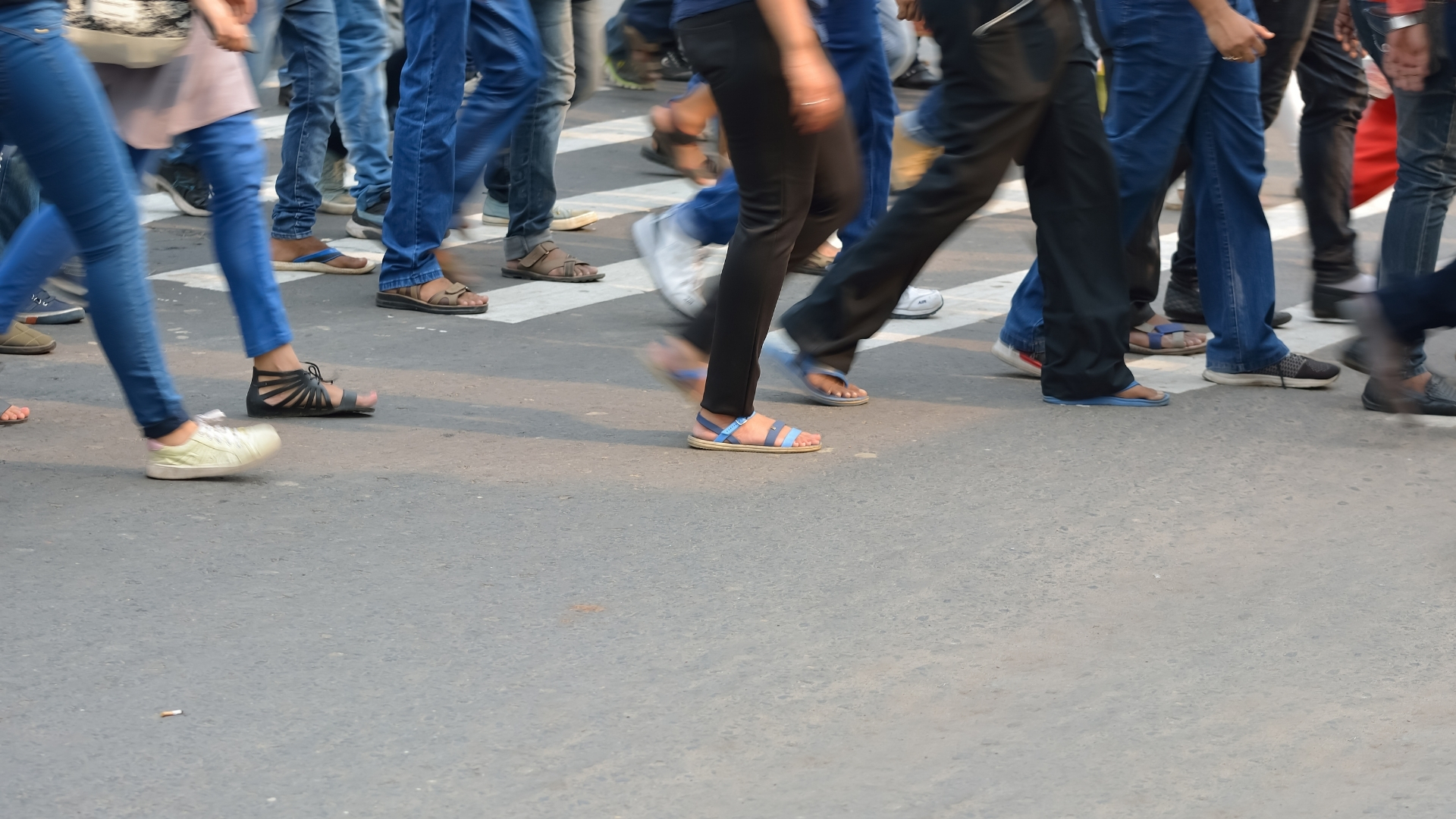
You still have a claim. California uses pure comparative negligence, so crossing outside a crosswalk reduces what you recover by your share of fault and never bars it. A Long Beach pedestrian accident lawyer works to lower that share by proving what the driver failed to do. That percentage decides most of the money.
The driver’s insurer will open by telling you that stepping outside a crosswalk ends the conversation. It does not, and the statutes it is quoting say so in their own text. Robert Hindin & Associates has represented injured people in California since 1975 and has never worked for an insurance company. Kyle Hindin has handled personal injury cases and nothing else since he was licensed in 2016.
If a driver hit you while you were crossing in Long Beach, call Robert Hindin & Associates at (310) 473-0337 for a free case review. You pay no legal fees unless the firm wins.
Why Crossing Outside a Crosswalk Does Not End Your Claim
Most people who call Robert Hindin & Associates after a pedestrian crash open with an apology. They were not in a crosswalk. Maybe they stepped into the street in the middle of a block to reach a bus stop. The driver told the officer they came out of nowhere. None of that ends the claim under California law.
The rule that decides these cases is not whether you followed every pedestrian statute. It is how a jury would divide responsibility between you and the driver. California answers that with a percentage rather than a gate. Your conduct lowers the number. It does not close the door.
California Uses Pure Comparative Negligence
California adopted pure comparative negligence in Li v. Yellow Cab Co., decided by the California Supreme Court on March 31, 1975. The court held that a plaintiff’s own negligence “shall not bar recovery, but the damages awarded shall be diminished in proportion to the amount of negligence attributable to the person recovering.” Before that ruling, any fault at all wiped out the case. That older rule has been dead in California for fifty years, and no pedestrian claim should be evaluated as though it survived.
How a Fault Percentage Turns Into Dollars
The percentage is not an abstraction. A jury first decides the full value of your losses, then reduces that figure by your share of fault. If your damages come to $400,000 and the jury puts 25% of the blame on you, you collect $300,000. Every point of fault argued off your side of the ledger is real money.
Why the Percentage Is Argued and Not Calculated
No formula produces the number. An adjuster proposes one early, usually a high one, and the file is built to defend or attack it. Photographs of sight lines, the driver’s speed, the condition of the street lighting, and any independent witness all move it. Treat the first percentage an insurer offers as an opening position.
What the Police Report Contributes and What It Does Not
An officer’s opinion about fault is not binding on a jury and is usually inadmissible at trial. It still matters, because the adjuster reads it first and anchors the offer to it. The measurements, the diagram, the witness names, and the driver’s own statement are the parts worth having. Those facts outlast the officer’s conclusion.
California Sets No Cutoff Percentage
Many states bar recovery once the injured person passes 50% or 51% of the fault. California does not. A pedestrian found 70% responsible still recovers 30% of the verdict. That is why an insurer’s early claim that you were mostly at fault is a negotiating move rather than a legal defense.
What the Adjuster Tells You in the First Phone Call
The first call from the driver’s insurer usually includes a version of one sentence. You were not in a crosswalk, so there is nothing we can do. That sentence is not a statement of California law, and it is not an offer. It is the opening position in a negotiation about a percentage. It comes before anyone has the report, the driver’s statement, or a single medical record.
What the Freedom to Walk Act Changed in 2023 and What It Did Not
You have probably read that jaywalking is now legal in California. That is not what happened, and the difference matters in a civil claim. The Freedom to Walk Act, Assembly Bill 2147, became Chapter 957 of the Statutes of 2022 and took effect on January 1, 2023.
The Act rewrote thirteen sections of the Vehicle Code, including the three that govern crosswalks. What it changed was enforcement. What it left alone was the rule of the road. The rule of the road is what an adjuster and a jury actually apply to your conduct.
Section 21955 Still Limits Where You May Cross
Subdivision (a) of Vehicle Code section 21955 was not repealed. It still says that between adjacent intersections controlled by traffic signals or by police officers, pedestrians shall not cross except in a crosswalk. That sentence sets the standard of care a jury will apply to your conduct. Whether an officer wrote you a ticket has nothing to do with it.
The Officer Now Needs to See an Immediate Danger of Collision
What the Act added is subdivision (b). An officer may not stop a pedestrian for that violation unless a reasonably careful person would see an immediate danger of a collision. The same subdivision preserves the duty of due care for pedestrians and drivers alike, in express terms. Read together, those lines legalize nothing about how a pedestrian may cross. They limit tickets, and a ticket was never what decided a civil claim.
What the Driver Still Owed You Under California Law
Every pedestrian case has two sides of the ledger. The insurer will build yours in detail. Someone has to build the driver’s, and California gives you a good deal to work with. The Vehicle Code puts real, specific duties on the person behind the wheel.
Those duties do not switch off because you were outside a crosswalk. They are written to survive exactly that fact, and the statutes say so in plain terms. Our California pedestrian accident attorneys build most of these cases on what the driver failed to do in the seconds before impact.
Section 21950 and the Duty to Yield in a Crosswalk
Vehicle Code section 21950 requires a driver to yield to a pedestrian in any marked crosswalk or in any unmarked crosswalk at an intersection. Most people do not know that unmarked crosswalks exist. Every intersection of two streets has one at each corner, painted or not. If you were crossing at a corner with no paint on the pavement, you may have been in a crosswalk the whole time.
Section 21954 Puts a Duty on Both Sides
Section 21954 is the statute the defense will quote. Subdivision (a) requires a pedestrian outside a crosswalk to yield to vehicles close enough to be an immediate hazard. Subdivision (b) then says this does not relieve the driver of the duty to use due care for any pedestrian on the roadway. The second half is the half that gets left out of the adjuster’s letter.
Where Long Beach Pedestrians Are Actually Being Hit
Fault arguments are won with specifics about the place. City collision data obtained by NBC4 and published on October 2, 2025, counted 215 pedestrian crashes in Long Beach between July 2024 and July 2025. Thirteen people were killed, and 58 of those crashes were investigated as felony hit-and-run cases.
That works out to nearly one pedestrian crash a day. Only 29 of the 215 victims were recorded as having the legal right of way in a crosswalk. If you were outside a crosswalk, you are not an outlier here. You are the ordinary case, and the ordinary case still gets paid. For the thirteen families, the claim becomes a California wrongful death case governed by its own statute.
The Five Corridors That Produce the Most Serious Injuries
The same data named five streets where the worst pedestrian injuries and deaths cluster. Pacific Avenue, 7th Street, Long Beach Boulevard, Pacific Coast Highway, and East Anaheim Street carry most of them. If your crash happened on one of these, the corridor itself becomes evidence. Design, speed, and lighting on a known high-injury street are arguments a driver cannot answer by pointing at you.
Pacific Coast Highway and East Anaheim Street
These two run east and west through dense commercial blocks with long gaps between signals. A pedestrian trying to reach a business on the far side often faces a quarter-mile walk to the nearest legal crossing. Juries understand that. The distance between controlled crossings is a fact about the street, not a character flaw in the person who crossed it.
Pacific Avenue, Long Beach Boulevard, and 7th Street
These three carry heavy transit traffic, which puts riders on foot at both ends of every trip. A crossing near a bus stop follows the stop, not the crosswalk. Long Beach Boulevard runs from downtown up into North Long Beach, and the character of the street changes several times along the way. Where on the corridor you were hit matters as much as which corridor it was.
Who Writes the Report and What Happens to It
Long Beach runs its own police department. A crash on a city street is not a Los Angeles Police Department matter, and it is usually not a California Highway Patrol matter either. That distinction changes who you call for the report and how long the wait runs. It also changes how much investigation your crash actually received. Both answers belong in the claim file early.
The Long Beach Police Collision Investigation Detail
The Collision Investigation Detail does not work every crash. Its published role covers driving under the influence, hit-and-run cases, traffic fatalities, and other traffic crimes. A routine injury collision is documented by the responding patrol officer instead, which is a much thinner record. Reports are requested through the Long Beach Police Records Division at 562-570-7381.
Why a Hit-and-Run Changes Which Policy Pays
Fifty-eight of those 215 Long Beach crashes were felony hit-and-run investigations. When the driver is never identified, there is no liability policy to claim against. The claim moves to your own uninsured motorist coverage, which brings different deadlines and a different adversary. The same problem shows up in Long Beach car accident cases, and reporting the crash to your own insurer quickly is what protects the option.
Which Insurance Policy Pays a Long Beach Pedestrian Accident Claim
Fault decides the percentage. Coverage decides the ceiling. A claim worth $500,000 against a driver carrying minimum limits is not a $500,000 recovery unless you find another source. That gap opens fastest in a traumatic brain injury case, where future care costs run past any single policy.
Two things changed recently that most published guidance has not caught up with. The first is how much coverage a minimum-limits driver actually carries. The second is how far your own policy reaches when you are on foot. Neither point is obscure, and both get missed constantly. Check them before anyone accepts a number.
The Minimum Liability Limits Went Up on January 1, 2025
Vehicle Code section 16056 set California’s minimum auto liability at 15/30/5 for many years. Senate Bill 1107 changed that. For policies issued or renewed on or after January 1, 2025, the minimum is now $30,000 for injury to one person. It is $60,000 when more than one person is hurt, and $15,000 for property damage. The statute raises those figures again on January 1, 2035. An article telling you the driver who hit you carries only $15,000 is quoting a superseded number.
Your Own Uninsured Motorist Coverage Follows You on Foot
Insurance Code section 11580.2 defines who counts as an insured under uninsured motorist coverage. For an individual policyholder it reaches the named insured, the spouse, and relatives in the same household, and it reaches them “while occupants of a motor vehicle or otherwise.” Those last two words are what matter to a pedestrian. You do not have to be in your car to use your own coverage, and most people never learn that.
What Deadline Does a Long Beach Pedestrian Accident Lawyer Watch First?
Two clocks run at the same time after a pedestrian crash, and they are very different lengths. Most people have heard about the two-year one. Almost nobody has heard about the six-month one, and that is the deadline that quietly ends cases.
Which clock applies depends on who is responsible for your injuries. A private driver is one answer. A city, a county, a transit agency, or a public works department is a completely different answer with a much shorter fuse. Sorting that out in the first weeks is not optional.
Two Years to Sue the Driver
Code of Civil Procedure section 335.1 gives you two years from the date of injury to file suit. It covers personal injury and wrongful death alike. Two years is the outside limit, not a target. Evidence in a pedestrian case decays fast, because skid marks wash away, signal timing gets adjusted, and witnesses move. Waiting most of the two years does not break the statute, but it usually costs you the stronger version of the case.
Six Months to Present a Claim Against the City of Long Beach
A dangerous street condition, a city vehicle, or a public agency can all contribute to a pedestrian injury. When one of them does, Government Code section 911.2 gives you six months to present a written claim. The City of Long Beach takes those claims at the City Clerk’s Office at 411 West Ocean Boulevard. Missing that window generally bars the lawsuit no matter how strong the case is.
Where a Long Beach Pedestrian Case Is Filed and Heard
Long Beach sits in the South District of the Los Angeles County Superior Court. A civil case from a Long Beach crash is normally filed at the Governor George Deukmejian Courthouse. The building occupies the block bounded by West Broadway, Maine Avenue, West 3rd Street, and Magnolia Avenue. It holds 31 courtrooms and hears criminal, traffic, civil, and family matters.
One detail here is out of date across most published guidance. For years every personal injury case in the county funneled into the Personal Injury Hub at the Spring Street Courthouse downtown. That system is gone. Effective January 8, 2024, personal injury cases filed in the Central District go to Independent Calendar departments at the Stanley Mosk Courthouse. Any article that still routes your case to Spring Street was written before the change.
What to Do Now if You Were Hit Outside a Crosswalk
The first weeks decide how much the fault argument costs you. Photograph the crossing you used, in daylight and after dark, and photograph the distance to the nearest signal in both directions. Get the names of anyone who stopped. Request the report from the Long Beach Police Records Division rather than waiting for the insurer to send it.
Do not give the driver’s insurer a recorded statement about why you crossed where you crossed. That interview exists to fix your fault percentage before you know what the case is worth. Get treated, keep every bill, and tell your own insurer about the crash, so uninsured motorist coverage stays available. Then talk to a lawyer before the six-month clock has a chance to matter.
Common Questions After a Long Beach Pedestrian Crash
These come up on almost every pedestrian call, and the answers turn on California law rather than on what the driver’s insurer says. None of this replaces advice about your own facts. It should tell you whether the reason you have been given to drop the claim is a real one.
Most of the reasons people give up are not legal reasons at all. They are things an adjuster said early, before anyone had the police report or the driver’s policy limits. Two months later the same claim often looks entirely different.
Can I File a Claim if the Police Cited Me After the Crash?
Yes. A citation is evidence a jury may weigh, and it is not a finding that you caused the crash. California courts decide civil fault separately from traffic enforcement, so a ticket sets your percentage no more than a warning would. The driver’s own conduct still gets measured against the same statutes, independent of what you were cited for. Plenty of cited pedestrians recover in full.
Does It Matter That I Was Wearing Dark Clothing at Night?
It matters to the argument, not to whether you have a claim. Drivers are required to reduce speed and use due care when conditions limit visibility, which is what night driving is. Expect the insurer to raise it, and expect the answer to be that a dark street is a reason to drive slower. Street lighting on the block becomes part of the record.
What if I Cannot Remember How I Entered the Roadway?
That is common after a head injury, and it does not sink the claim. Physical evidence usually settles the question better than memory does, through the point of impact, the vehicle damage, and any camera on the block. Businesses along a corridor often keep footage for only days, so it has to be requested fast. Your account matters, but it is not the only proof available.
Will My Own Health Insurance Have to Be Repaid?
Usually yes, in whole or in part, through a lien or a reimbursement right. That is normal, and it is negotiated at the end of the case rather than paid out of pocket along the way. Use the coverage now, keep every explanation of benefits, and let repayment be handled as part of the settlement. Declining treatment to avoid a lien costs far more than the lien.
How Much Does It Cost to Have a Lawyer Review This?
Robert Hindin & Associates reviews pedestrian cases at no charge and takes them on a contingency fee, which means no legal fees unless the firm wins. There is no cost to find out whether the fault argument against you is as strong as the insurer says. Most people who call have been told something about their case that California law does not actually support.
Talk to a Long Beach Pedestrian Accident Lawyer at Robert Hindin & Associates
If a driver hit you while you were crossing, the fact that you were outside a crosswalk is an argument against you, not an answer to your claim. California reduces recovery by fault. It does not erase it. A Long Beach pedestrian accident lawyer at this firm can tell you what your share realistically looks like and how far the driver’s coverage will actually reach.
Robert Hindin has practiced California personal injury law since 1975. Kyle Hindin has represented injured clients and nobody else since he was licensed in 2016. The firm has never worked for an insurance company, and it takes pedestrian cases on a contingency fee, so there are no legal fees unless the firm wins. You can read more about the firm before you call.
Call (310) 473-0337 for a free case review, or reach the team through our contact page. If a public agency may share responsibility for your injuries, the six-month claim deadline is already running. That makes the call worth making this week rather than next month.
You will speak with someone who handles these claims, not a screener. Bring what you have, including photographs, the report number, and the name of any insurer that has contacted you. If you have nothing yet, call anyway.